When the Light Fades: What's Really Happening to Kids' Love of Learning Around Third Grade
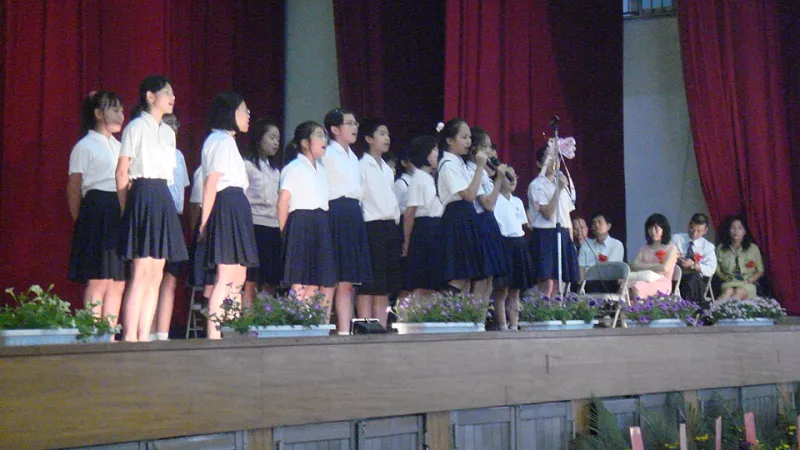
Photo: Dquai, CC BY-SA 4.0, via Wikimedia Commons
Ask a kindergarten teacher what her students think of school and she'll probably laugh. They love it. They run to the door. Ask a fourth-grade teacher the same question and the answers get quieter. Somewhere in between, something shifts.
Researchers have a name for it: the engagement dip. By third grade, a meaningful share of American students report feeling less interested, less confident, and less capable in school than they did two years earlier. It's not a blip, and it's not inevitable.
What the Research Actually Shows
The dip shows up consistently in national survey data. Studies tracking student attitudes have found that enthusiasm for school peaks in early elementary and declines steadily afterward, with third and fourth grade marking a noticeable drop-off. Confidence follows a similar curve — kids who once described themselves as "good at math" start hedging.
Why? A few forces converge at once. Third grade is when instruction shifts from learning to read to reading to learn, and when grading, testing, and comparison become more visible. Playtime shrinks. Recess gets shorter. The work gets harder, and for the first time, some kids conclude that the problem is them, not the material.
Developmental psychologists point out that eight-year-olds are also comparing themselves to peers more aggressively than they did at six. A child who once bounced through a tough worksheet now notices who finishes first.
Japan's Answer: A Weekly Block With No Right Answer
For decades, Japanese elementary schools have carved out a weekly period called kokoro no kagai — the "period for integrated learning." Translated loosely, it's time set aside for self-directed, open-ended inquiry. There's no textbook and often no fixed curriculum.
In practice, kokoro classes look wildly different from school to school. One class might spend a semester investigating why the neighborhood bakery closes early. Another might map the local watershed, interview elderly residents, or plan a community cleanup. The through-line is that students choose the question, wrestle with it over weeks, and present what they found.
Japanese educators describe the goal in terms of zest for living — the stamina, curiosity, and problem-solving that standardized subjects alone can't build. The period isn't a break from rigor. It's a different kind of rigor, one where a struggling reader can still be the class's best interviewer.
That last part matters for the engagement dip. When the only measure of success is a graded worksheet, kids who fall behind early start opting out emotionally. Open-ended projects give every child a way to contribute before they've mastered everything.
Two American Schools Trying It
The model doesn't require a passport. A small but growing number of US elementary schools are building similar blocks into their week.
At a public elementary outside Portland, Oregon, fourth graders spend Friday afternoons on what staff call "wonder work." Students pitch a question — anything from "why does our creek smell in August?" to "how do you start a small business?" — and spend the semester investigating it. Teachers act as coaches, not lecturers. The principal reports that attendance on Fridays is the strongest of the week.
In a suburban Chicago district, an elementary school folded a version of integrated learning into its existing schedule for third grade specifically — the exact grade where the dip hits hardest. Students work in small teams on community-connected problems identified with help from the local library and parks department. Early teacher surveys point to something familiar: the kids who dreaded worksheets are the ones leading the interviews.
Neither school is discarding math or reading. They're adding a third lane, the way Japanese schools do.
Signs to Watch For at Home
Parents don't need a research grant to spot the dip. A few signals are worth paying attention to around ages seven to nine:
- Your child stops telling you anything about school without being asked — and then gives one-word answers.
- Homework that once took ten minutes now triggers tears or stalling, most nights.
- Your child says "I'm bad at" something they used to enjoy.
- School complaints shift from specific ("gym was canceled") to global ("school is boring," "I'm dumb").
None of these alone are a crisis. A cluster of them, lasting weeks, is worth a conversation.
Questions Worth Asking at Conferences
Parent-teacher conferences are the natural place to raise this, and specific questions get better answers than "is everything okay?"
Try asking: When does my child seem most engaged during the day? What does that look like? Then: Does our school offer any open-ended or project-based time, even occasionally? And the one that most directly targets the dip: What's my child's current belief about their own ability — and what are we doing to protect it?
If the school has nothing like an inquiry block, that's not an accusation — it's an opening. A handful of engaged parents asking the same question is often how a pilot program starts.
The third-grade slump is real, but it isn't destiny. Kids don't stop loving learning because they grow out of it. They stop because school, at that exact moment, stops giving them a way to be good at something that matters. The fix, in Japan and in the American classrooms borrowing the idea, is to hand them one.