Maybe Kindergarten Wasn't Supposed to Have Homework: Reconsidering the Rush in Early Education

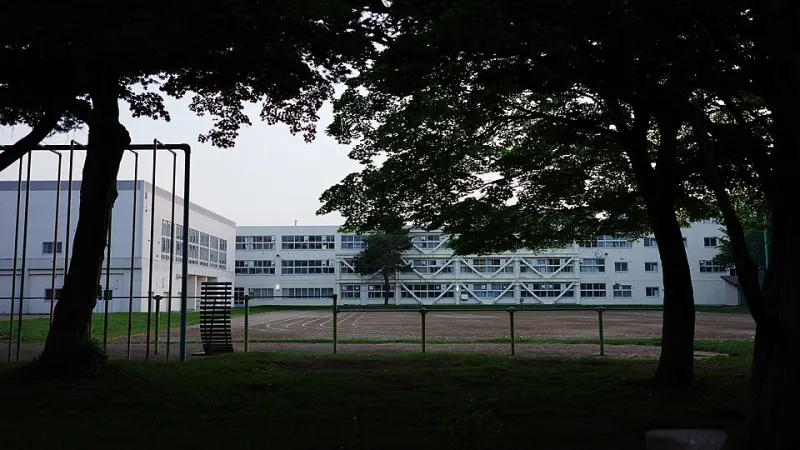
Photo: Alhassan Musah Amk, CC BY-SA 4.0, via Wikimedia Commons
Ask a veteran kindergarten teacher what has changed over the past twenty years and you'll rarely hear about the kids. You'll hear about the paperwork. The sight words. The data walls. The worksheets that migrated down from first grade, then from second, until five-year-olds are expected to sit and produce academic output for hours a day.
Meanwhile, in Japan—often stereotyped in the US as a pressure-cooker of cram schools and exam stress—there's a competing philosophy with a name worth knowing: yutori. It translates roughly as breathing room or slack, and in early childhood it means something specific: long stretches of free play, short bursts of guided learning, and a heavy emphasis on daily routines—setting out futons, serving lunch, caring for classroom plants—as the real curriculum for young children.
Is there anything American schools should borrow from it? Maybe more than we think.
The Pushdown Problem
Researchers who study early education have a term for the trend: curriculum pushdown. Academic content once reserved for first grade now arrives in kindergarten; some districts have effectively eliminated nap time, dramatic play corners, and even recess reductions to make room for literacy blocks.
The motivations aren't sinister. Many are well-intentioned responses to achievement gaps and accountability pressures. But early-childhood researchers warn the approach misreads how young children actually learn. Decades of evidence—from the classic HighScope studies to contemporary work on play-based learning—suggest that play is not a break from learning at this age. It is the mechanism. Through play, children practice language, negotiation, self-regulation, and the persistence that formal academics will demand later.
Teachers on the front lines describe the consequences in human terms: more meltdowns, more referrals, more children labeled as struggling before their brains were developmentally ready for the tasks being asked of them.
What Yutori Gets Right (and Where It's Been Misread)
To be fair, yutori education in Japan has its own complicated history. When it was applied to older students in the 2000s, critics blamed it for declining test scores and it was scaled back—so it's not a magic word. But its application to early childhood is different and, many argue, more defensible. Nobody is proposing that kindergartners learn less. The proposal is that they learn differently: through movement, story, routines, and self-directed play, with formal academics arriving gradually and in developmentally honest doses.
The Japanese model also treats emotional and social growth as core content, not enrichment. Children learn to wait their turn, to notice a classmate who's sad, to take pride in small responsibilities. American teachers will recognize these as the exact skills that predict later school success—the ones the worksheet era keeps crowding out.
A Balanced Case, Honestly Stated
Advocates of academically robust kindergarten raise fair points. Quality pre-K and early literacy instruction can be powerful equalizers, especially for children who arrive at school with fewer books at home. The answer isn't zero academics; it's fit. A five-year-old can learn letter sounds through songs, games, and play—a teacher skilled in play-based methods covers the same ground with fewer tears and better retention.
The most promising US experiments blend both: playful, developmentally informed kindergartens with strong, joyful literacy instruction woven in. Several states have adopted play-based early learning guidelines, and a handful of districts have rebuilt kindergarten around longer free-play blocks with small-group academic time layered on top.
Questions Worth Asking at Your Next School Meeting
Whether you're choosing a kindergarten or advocating within your district, these questions cut to the heart of it:
- How much of the day is child-directed play, and how much is teacher-led seat work?
- Is recess daily, protected, and outdoors?
- How does the school handle a child who isn't ready to read yet—support, or pressure?
- Are social-emotional skills treated as curriculum or as a reward after the "real" learning?
- What does homework for a five-year-old look like, and why?
The Long Game
Childhood is not a race with a finish line in first grade. The yutori idea, stripped to its essence, is a modest one: leave a little slack in the rope. Children given room to play, to belong, and to grow at a human pace tend to arrive—academically, socially, emotionally—with their engines intact.
That's not lowering the bar. It's building the runway the bar deserves.