Mud on Their Boots, Wonder in Their Eyes: Inside America's Forest Kindergarten Boom
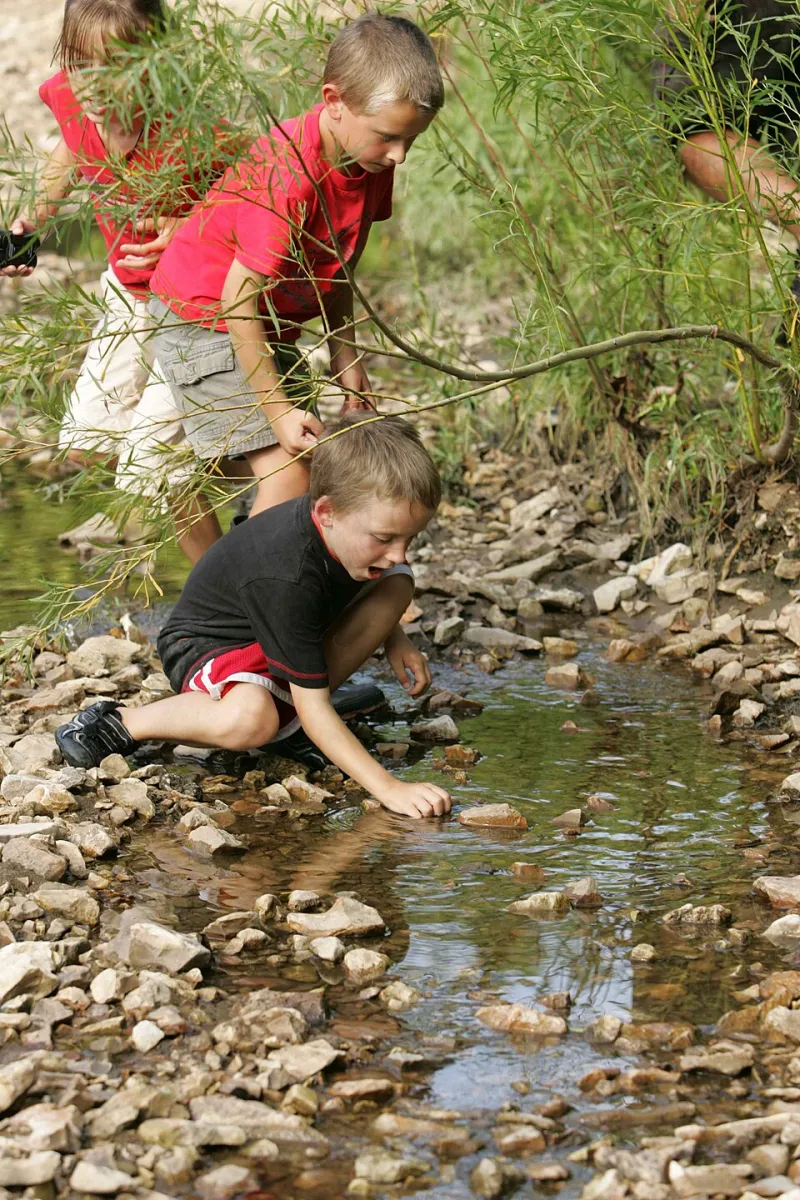
Photo: U.S. Fish and Wildlife Service, Public domain, via Wikimedia Commons
On a drizzly Tuesday morning in Portland, Oregon, a group of four-year-olds is negotiating a log bridge over a shallow creek. No one is rushing them. No one is holding a flashcard. Their teacher, boots planted on the bank, waits quietly while the children figure out footing, spacing, and who goes first.
This is what a morning meeting looks like at a forest kindergarten — and it's a format that's quietly spreading across the United States.
From Forest Bathing to Forest Preschools
The American nature-based early education movement draws inspiration from several traditions, but one of its philosophical touchstones is Japan's practice of shinrin-yoku — literally "forest bathing" — the idea that time among trees measurably calms the body and mind. Japan's own early childhood programs have long treated outdoor time not as recess from learning but as learning itself.
US forest kindergartens have taken that spirit and run with it. In these programs, children typically spend 50 to 100 percent of the school day outside, in all weather. There may be a yurt or a pavilion for extreme conditions, but the real classroom is a wooded lot, a park, or a farm edge.
The growth has been striking. Nature-based preschools were nearly nonexistent in the US two decades ago; today, advocates estimate there are hundreds of programs serving thousands of children, from Vermont to Washington State.
What Parents Notice
"The first month, I panicked," admits Marisol Reyes, whose daughter attends a forest program outside Minneapolis. "I kept asking, 'When do they do letters? When do they do numbers?' Then I started noticing things at home. She persists longer on hard tasks. She narrates her own problem-solving. She's not afraid of being bored outside."
Educators say those outcomes aren't accidental. Without a plastic playground structure directing the play, children have to invent their own games, resolve their own disputes, and assess their own physical risks — how wet is too wet, how tall is too tall to climb.
Teachers also point to something harder to quantify. "Kids who spend their days outside develop what I'd call an easy relationship with discomfort," says one Washington State instructor. "Cold hands, a scraped knee, a long walk. It doesn't derail them. That's a skill that pays off in every classroom they'll ever sit in."
The Honest Trade-Offs
Let's be straightforward about the concerns, because parents raising them are right to do so.
Less explicit academic instruction. Many forest kindergartens teach letters and numbers incidentally — counting acorns, noticing the letter shapes in tree bark — rather than through direct drills. Some children arrive at kindergarten without the rote skills their peers practiced on worksheets. Research on play-based early education is generally reassuring on this front, but it's a real difference families should weigh, especially if their local elementary school runs a more academic kindergarten.
Weather is not optional. Kids need genuinely good gear: insulated layers, rain suits, wool socks. That's a real cost, often $150 or more per child, and some programs build gear libraries to help.
Access matters. Forest preschools have clustered in affluent, green spaces. If the movement is going to matter for every child, scholarships, urban programs, and public-school partnerships have to grow alongside the tuition-based ones.
Is a Nature Preschool Right for Your Family? A Practical Checklist
If you're considering the switch, here's how to evaluate a program:
- Ask about the ratio of outdoor time on paper versus in practice. Visit on a rainy day if you can.
- Look at the teacher's role. Strong programs balance freedom with skilled, subtle guidance — not total hands-off.
- Ask how safety risks are managed. Good answers involve teaching children to assess risk themselves, not just banning anything elevated.
- Ask how emergent literacy is woven in. There should be a thoughtful answer, even if it's not worksheets.
- Check the gear support. Programs that help families with layers and boots are programs that understand their community.
- Consider your child. Some kids thrive immediately; others need a few hard weeks to adjust. Both are normal.
The Bigger Picture
The forest kindergarten boom isn't really about mud. It's about a growing conviction among American parents that childhood — real, unhurried, weather-exposed childhood — is itself educational. Japan's forest-bathing tradition and its unhurried approach to early years offer a useful reminder: children don't need to be accelerated to be prepared.
Sometimes, preparation looks like a log bridge, a long pause, and a four-year-old deciding she can make it across.