Small Money, Big Lessons: Rethinking the Allowance Before You Hand Over $50
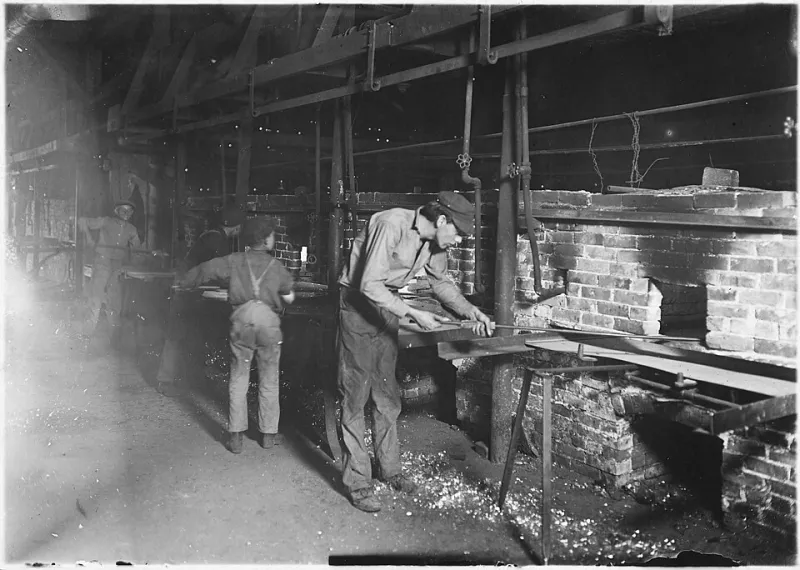
Photo: Lewis Hine, Public domain, via Wikimedia Commons
Walk into a Japanese household with school-age kids and you may find a small envelope, a coin purse, or a simple notebook tracking something modest: a few hundred yen a month, handed over with expectations attached. That's roughly ten to twenty dollars. Not a lot. And that, argues a growing chorus of parents and educators, is exactly the point.
Meanwhile, in the US, allowance inflation is real. Advice columns and social media feature parents debating weekly stipends of $20, $30, even $50 — sums that let a ten-year-old buy whatever they want, whenever they want, without ever feeling the pinch of a choice.
I'd like to make an unfashionable argument: the small allowance is the better teacher.
Why Tiny Paychecks Teach Bigger Lessons
The Japanese approach to children's pocket money — okozukai — tends to share a few traits. It's modest. It's often tied to the rhythm of family life rather than unconditional. And it's frequently paired with a record-keeping habit: many Japanese children keep a little ledger of what came in and where it went, a practice that turns an allowance into an ongoing math and reflection exercise.
The magic of a small sum is scarcity. A child with $5 a week must actually make decisions. Save three weeks for the $15 toy? Spend it all on snacks Friday and wait? A child with $50 doesn't face those dilemmas — and the dilemmas are the curriculum.
There's also a gratitude dividend. When a purchase requires patience, the purchase means something. Ask any adult who saved up for something as a kid; they can probably still tell you what it was.
And the numbers back the intuition. International surveys on financial literacy have repeatedly shown Japanese teens ranking among the world's best at understanding saving and spending trade-offs — a culture where cash use remains common and children physically handle money, watching it shrink as they spend.
The Counterargument, Honestly Stated
Defenders of generous allowances raise fair points. Some parents don't want money tied to chores, arguing kids should contribute to the household simply because they're part of it — a view common in Japan, too, where many families separate okozukai from housework entirely. Others note that larger allowances give kids more practice with bigger decisions and reduce parental veto power over small purchases.
These aren't wrong. But practice only builds judgment when the stakes force thoughtfulness. More money doesn't mean more learning; often it means fewer lessons per dollar.
A Framework for Your Family's Money Curriculum
Whether your budget is 100 yen or 10 dollars a week, here's a step-by-step structure adapted from what Japanese families and financial educators do well:
1. Pick a small, predictable amount. A common Japanese rule of thumb: a few hundred yen per month for younger elementary kids. In the US, think $1 per year of age per month, or a flat $3–$5 weekly for early elementary. The amount should be small enough that choices matter.
2. Decide your philosophy on chores — and say it out loud. Two workable models: allowance as a family stipend with chores as a separate, non-negotiable contribution, or allowance partially tied to responsibilities beyond a child's normal duties. Either is fine. Ambiguity isn't.
3. Introduce the ledger. A 100-yen notebook is all you need. Kids write (or draw) what they received and what they spent. This builds arithmetic, memory, and — crucially — reflection.
4. Use cash where possible. A physical wallet makes money concrete in a way a tap-to-pay world doesn't. Watching coins leave your hand teaches something a balance on a screen never will.
5. Create a saving goal together. Help your child pick one thing that costs two to six weeks of allowance. Make a simple chart. Celebrate the day the goal is reached like it's a holiday, because for them, it kind of is.
6. Add a giving jar. Even 10% of a small allowance, set aside for a cause or gift of the child's choosing, plants the idea that money isn't only for getting.
7. Let them make bad purchases. This is the hardest one. The $4 toy that breaks in a day is the cheapest financial mistake your child will ever make. Resist the rescue.
8. Raise the stakes gradually. As kids hit middle school, shift from weekly handouts to a monthly sum covering agreed categories — and let natural consequences do the teaching.
The Real Inheritance
We tend to think of financial education as something that happens in high school econ or a first checking account. But the habits that matter most — patience, tracking, delayed gratification, generosity — are built one small decision at a time, starting around age six.
The Japanese 100-yen allowance isn't about the yen. It's about designing a childhood where money is visible, limited, and meaningful. You can build that on ten dollars a week just as easily as on a hundred.
Probably more easily, actually.