Hand Them a Hammer: Inside the Adventure Playgrounds Where American Kids Are Finally Allowed to Take Risks
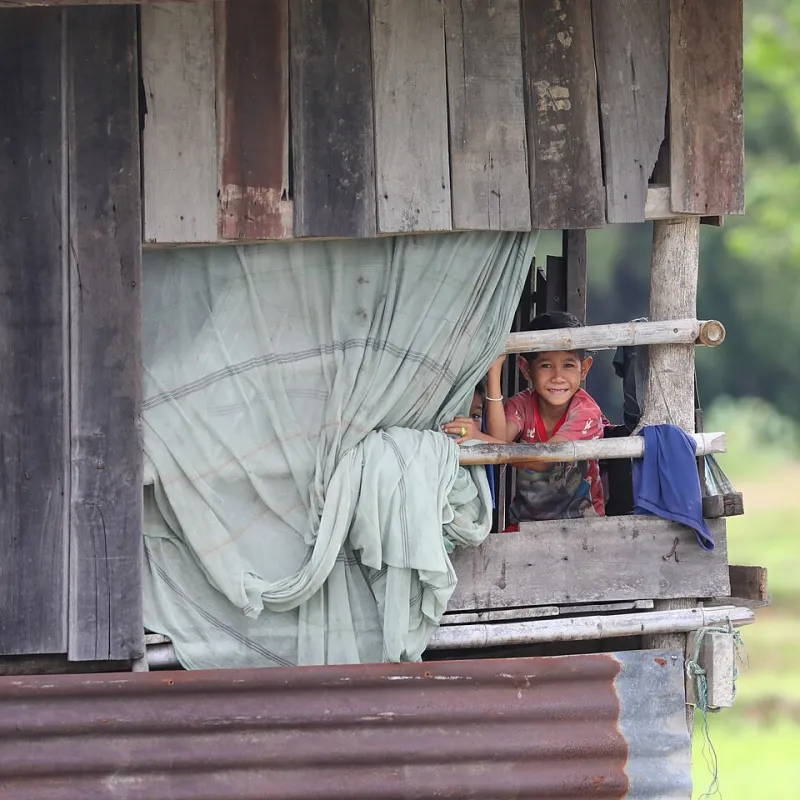
Photo: Basile Morin, CC BY-SA 4.0, via Wikimedia Commons
There's a moment at nearly every American playground that regulars know by heart. A child climbs a little higher than the adults below would like, and a chorus of "be careful!" floats up from the bench. We mean well. We also, if we're honest, hover.
Now picture a different scene: a fenced lot filled with dirt piles, scrap wood, tires, and tools. A seven-year-old is driving a nail into a wobbly fort she designed herself. Nobody is telling her to stop. This is what a Japanese boken asobi no hiroba—an adventure playground—looks like, and a small but growing group of American communities is trying to recreate it.
What Actually Happens at a Boken Playground
Japan has more than 400 of these sites, many inspired by the original "junk playgrounds" that emerged in postwar Copenhagen. The idea is radical in its simplicity: give children raw materials—lumber, mud, water, rope, fire in some cases—and let them build, demolish, and rebuild their own world.
The adults on site are called playworkers, and their job description reads like a parenting anti-manifesto. They are trained to intervene only when a situation is genuinely dangerous in a way the child cannot assess—"risky" is welcome, "hazardous" is not. A child wobbling on a log is learning balance and judgment. A rotten plank hidden under a tarp is a hazard, and that's when a playworker steps in.
The result, researchers who've observed these spaces say, is a kind of focused, negotiated play that's increasingly rare in the US. Kids argue over fort designs, invent rules, take turns with the hammer, and occasionally fail spectacularly at whatever they're building—and come back the next day to try again.
Why American Play Got So Sanitized
Child development experts point to a tangle of culprits: litigation fears, crowded municipal budgets, the 24-hour news cycle making rare tragedies feel common, and a cultural shift toward structured enrichment over free time. The upshot is that many American children today have fewer opportunities for genuinely self-directed, physically challenging play than any generation before them.
The irony is that the research points the other way. Studies on risky play—climbing, speed, rough-and-tumble, exploring at height—consistently link it to better risk-assessment skills, improved motor confidence, and lower levels of anxiety. Kids who are never allowed to test limits don't learn to judge limits; they just learn that limits are someone else's job.
The US Experiment Begins
It's still early days, but the movement is real. The Berkeley Adventure Playground in California has operated for decades, letting kids build with "junk" materials on a dedicated lot. In Houston, community advocates have pushed for loose-parts play spaces in public parks. Smaller pop-up efforts—mud kitchens, scrap-building zones at festivals—are sprouting in towns where parents simply started showing up with pallets and asked forgiveness later.
The obstacles are predictable: insurance liability tops the list, followed by municipal codes written with plastic safety-surfaced equipment in mind. The programs that succeed tend to solve this the Japanese way—through trained staff, clear posted frameworks, and partnerships with city recreation departments rather than rogue operation.
A Practical Path for Your Community
If the idea lights you up, you don't need to break ground on a full adventure playground next month. Start smaller:
- Host a loose-parts play day. Cardboard boxes, crates, fabric, and rope in a park or schoolyard. Watch what children build when nobody assigns the task.
- Recruit allies early. A local rec department, a PTA, a neighborhood association—bureaucracy moves faster when it's invited in.
- Find or train a playworker. Organizations like Pop-Up Adventure Play offer training and pop-up models designed for exactly this kind of grassroots start.
- Talk about risk honestly. Frame the ask around managed risk and child development, not nostalgia. Data persuades park boards; vibes persuade parents.
Letting Go, Slowly
No one is suggesting parents abandon common sense or that every backyard needs a power tool station. But the deeper lesson of the boken playground isn't about hammers. It's about trust—the uncomfortable, daily practice of watching a child struggle and letting the struggle belong to them.
The fort will be lopsided. The paint will end up on someone's shoes. And the kid who built it will walk a little taller, which is precisely the point.