Two Feet, One Route, Zero Car Seats: Why the Walking School Bus Is Making a Comeback
Photo: Wilfredor, CC BY-SA 3.0, via Wikimedia Commons
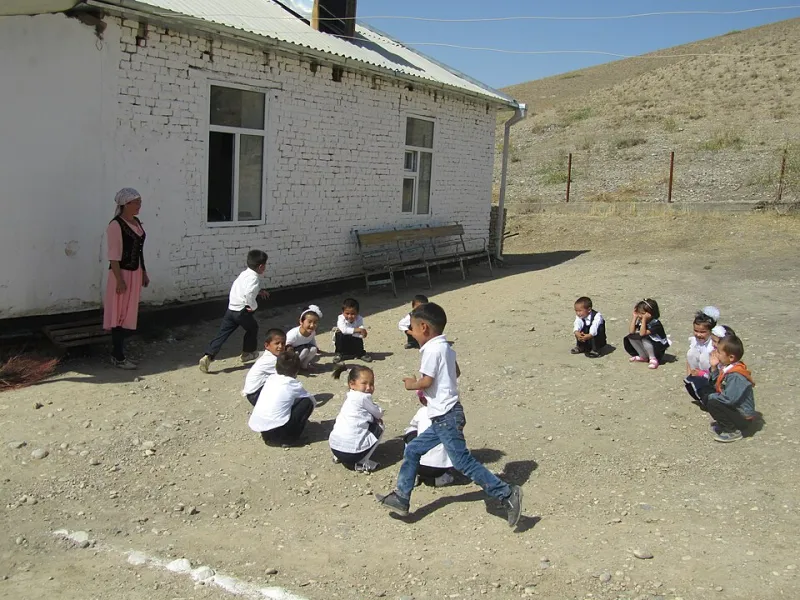
Every weekday morning at 7:35, a small procession forms at the corner of a cul-de-sac in Boulder, Colorado. A parent in a neon safety vest checks her watch. Kids trickle out of front doors, backpacks bouncing. By 7:50, the group has grown to a dozen children, and together they walk the mile and a half to Creekside Elementary—chatting, spotting squirrels, and crossing streets in a loose, giggling pack.
No bus. No car line. No honking.
This is a walking school bus, and after decades on the fringes, the idea is quietly spreading through American towns and cities—from Boulder to Boston, Portland to Charlotte. And honestly? It might be one of the simplest, cheapest ways to give kids back something they've lost: an unaccompanied-feeling journey, a daily dose of fresh air, and a real connection to the neighborhood they live in.
What Exactly Is a Walking School Bus?
Think of it as carpooling, minus the car. A trained adult volunteer—usually a parent, grandparent, or retired neighbor—walks a fixed route at a fixed time, picking up children at designated 'stops' along the way. The group walks together to school. In the afternoon, the route reverses.
The concept originated in the 1990s in Australia and caught on in the UK before crossing the Atlantic. Today, the Safe Routes to School movement, along with local health departments and PTAs, has helped launch hundreds of routes nationwide. Some are informal—one neighbor walking a handful of kids. Others are fully organized, with route maps, volunteer training, reflective vests, and even attendance trackers.
The Safety Math Parents Should See
The first question from most parents is predictable: is it safe?
Here's the counterintuitive answer—walking school buses may be safer than the status quo. Traffic danger around schools spikes dramatically during drop-off and pickup windows, when hundreds of cars converge on the same block in a fifteen-minute window. Studies of school-arrival patterns consistently show that the majority of 'near miss' incidents involving child pedestrians happen in these car-line zones.
A walking bus does three things at once:
- It removes cars. Every family that joins takes one vehicle out of the congestion zone, shrinking the risk for everyone else.
- It adds trained adult supervision. Routes are chosen for crossings, sidewalks, and sightlines—often with input from the city's traffic engineer.
- It teaches real pedestrian skills. Kids learn to look both ways, read intersections, and navigate their own town, with a safety net beside them.
There's also a quieter safety argument: visibility. A group of ten kids and two adults in reflective vests is far more noticeable to drivers than a single child walking alone.
The Side Effects Nobody Expected
Ask anyone who's run a route for a season and the conversation drifts away from safety. It drifts toward community.
Volunteers describe knowing every dog on the route by name. Kids who started the year as strangers are now best friends. Grandparents who walk the route say it's the only reason they know what's happening on their street. One Boston organizer put it plainly: 'The bus was supposed to solve a traffic problem. What it actually solved was that nobody on this block knew each other.'
There's a physical benefit, too. Children need around an hour of movement a day, and for many kids, the walk to school is the whole daily allotment. Teachers report that kids who walk in arrive more alert and settled—movement before sitting has a way of burning off the fidgets.
And then there's independence. Walking a familiar route in a group is a stepping stone—the training wheels version of the freedom kids once had. It's a bridge between being driven everywhere and, eventually, walking on their own.
A Blueprint for Your Block
Inspired? Here's the realistic, low-drama version of how routes actually get started:
Week 1: Find your co-conspirators. You need at least two committed adults per route. Post in the neighborhood group chat, the school app, or the PTA newsletter. Don't aim for twenty families—aim for three.
Week 2: Walk the route yourself. Pick a path with sidewalks, low-speed streets, and marked crossings. Time it. Note the trouble spots. If your school has a Safe Routes to School coordinator or a local police community-liaison, ask them to walk it with you—most will happily do it.
Week 3: Set the schedule and stops. Fixed times are non-negotiable. A bus that 'leaves when everyone's ready' becomes a bus that nobody catches. Choose stops that are easy to see and easy for parents to hand off.
Week 4: Do a dry run. Walk the route once with just adults, then once with kids and parents together. Swap contact info. Agree on basic rules—no detours, no leaving early without telling the lead walker.
Ongoing: Build a bench of volunteers. The number one reason routes die is volunteer burnout. Rotate weekly shifts, recruit grandparents, and recruit the high schooler next door who needs service hours.
It Doesn't Have to Be All or Nothing
Not every family can walk every day, and that's fine. Plenty of successful routes run just two or three mornings a week. Some do 'Walking Wednesdays' only. Some schools run a monthly version where the whole school participates. A part-time walking bus still beats zero walking buses.
The bigger idea here fits right into what we keep coming back to at Kodomo Project: kids thrive when the adults around them build small, reliable structures of care. A walking school bus is exactly that—a promise, kept daily, that a grown-up will show up at the corner and walk with them.
It costs nothing. It needs no legislation. It starts with one parent, one vest, and one Tuesday morning.
Maybe yours.