The Woman at the Corner of Maple and 4th: Meet the Unpaid Neighbors Keeping America's School Mornings Running
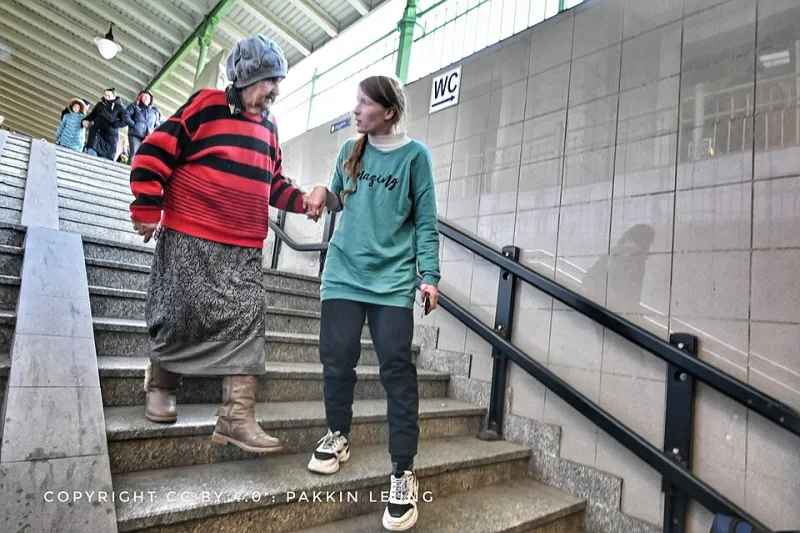
Photo: 梁柏堅 Pakkin Leung, CC BY 4.0, via Wikimedia Commons
Every weekday morning at 7:35, Dorothy Ellison wheels her small trash bin to the curb at the corner of Maple and 4th — even when it isn't trash day. The bin is her signal. Kids walking to Lincoln Elementary know that if Dorothy is out front, the corner is 'open.'
She's been doing it for eleven years, since her own grandchildren moved away. She helps the kindergartners cross, keeps an eye out for the boy whose mom works overnights, and once chased a first grader three houses down because he'd forgotten it was a half day. She has never been paid. She has never been formally thanked by the district. She has also, in more than a decade, never missed a morning.
Dorothy is what researchers and community organizers have started calling an informal caregiver of the school commute — though most people just say 'the bus stop grandma.'
The Invisible Workforce at the Curb
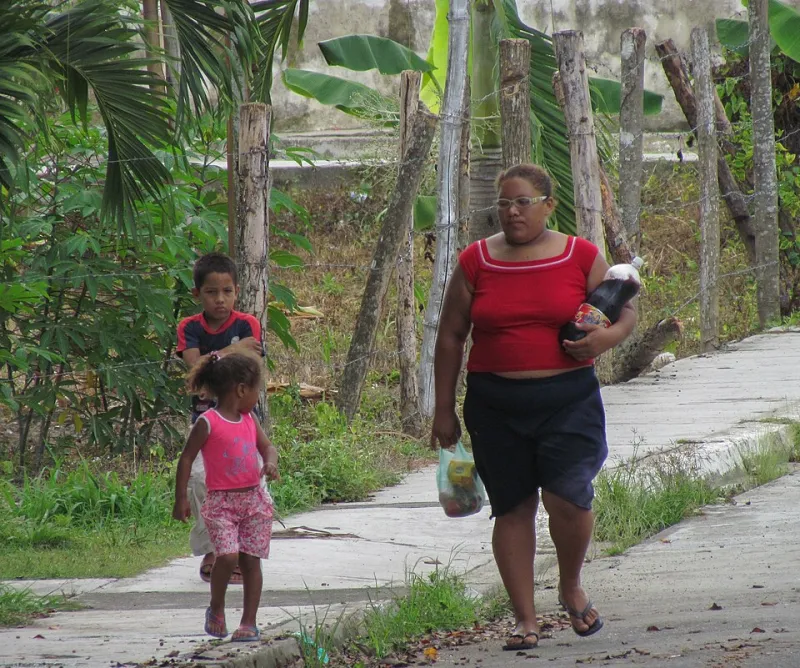
Ask around in almost any American neighborhood and you'll find one. The retiree in Tucson who keeps a folding chair at the bus stop and a stash of granola bars in her fanny pack. The dad in a Columbus suburb who learned every kid's name on his street and now shepherds a crowd of fifteen across a busy arterial road. The former school cafeteria worker in rural Georgia whose porch has become the unofficial waiting room for kids whose parents leave for shifts before the bus comes.
None of these people applied for the job. Nobody trained them. They simply noticed a gap — a child alone at a curb, a route with no crossing guard, a parent stretched too thin — and stepped into it.
Sociologists sometimes describe this as 'social infrastructure': the informal, often invisible web of people and places that holds daily life together. And like most invisible work, it's disproportionately done by women, disproportionately done by older adults, and almost never acknowledged in any official capacity.
The Gray Zone They Live In
Here's the uncomfortable part: Dorothy and people like her operate in a legal no-man's-land.
If a child is hurt while under an informal caregiver's watch, liability questions get murky fast. Homeowners insurance policies may or may not cover incidents that happen on the sidewalk out front. Some municipalities have ordinances about supervising children that aren't their own — rarely enforced, but rarely tested either. A handful of informal caregivers have been told by well-meaning school administrators to 'be careful,' which they reasonably hear as stop.
The result is a strange paradox. Schools and districts desperately want kids to arrive safely. Communities benefit enormously from extra eyes at dangerous corners. And yet the people providing that safety net do so with zero recognition, zero support, and a background hum of legal anxiety.
One bus stop grandma in Ohio told us she carries a printed note from the parents on her street stating they've asked her to watch the kids. 'It's not a legal document,' she said, laughing. 'It's a peace-of-mind document. For me.'
What Would Change If We Said Thank You — Formally?
A few places are starting to experiment with something better.
Some PTAs have begun formally recognizing corner caregivers with a small stipend, a reflective vest, and — perhaps most meaningfully — a name and a title. A school district in the Pacific Northwest piloted a 'Neighborhood Greeter' program that pairs volunteers with a district liability waiver and a two-hour orientation on traffic safety. Participation doubled in one year.
The steps don't have to be complicated:
- Name them. A certificate, a mention in the school newsletter, a photo on the wall. Recognition costs nothing and changes how people see themselves.
- Cover them. Districts or parent organizations can extend volunteer liability coverage to informal caregivers — the same protection given to field trip chaperones.
- Equip them. A reflective vest, a stop paddle, a small stipend for coffee and mittens. Modest investments with outsized returns.
- Connect them. A group text or monthly meetup so the woman on Maple and 4th knows the woman on Elm Street, and neither feels like she's the only one holding a corner.
The Village Isn't Nostalgia. It's a Woman With a Trash Bin.
We talk a lot in this space about rebuilding the village — about programs, policies, and partnerships. But sometimes the village already exists. It's standing at the corner in a rain jacket, waving at a bus.
The question isn't whether these neighbors matter. The data on safe routes to school, on attendance, on kids' sense of being known, suggests they matter a great deal. The question is whether we'll keep letting them do it alone, unpaid and unrecognized — or whether we'll finally pull up a second folding chair.
Dorothy, for her part, isn't waiting for an answer. But when we asked what would happen if she ever stopped, she thought for a moment.
'Well,' she said, 'somebody'd have to do it. That's the whole point, isn't it?'
Know a corner caregiver in your neighborhood? Kodomo Project would love to hear their story — and if you're inspired to start a recognition program at your school, our volunteer toolkit can help you get started.