Step Back, Grown-Ups: The Recess Experiment Where Kids Learn to Fight Their Own (Tiny) Battles
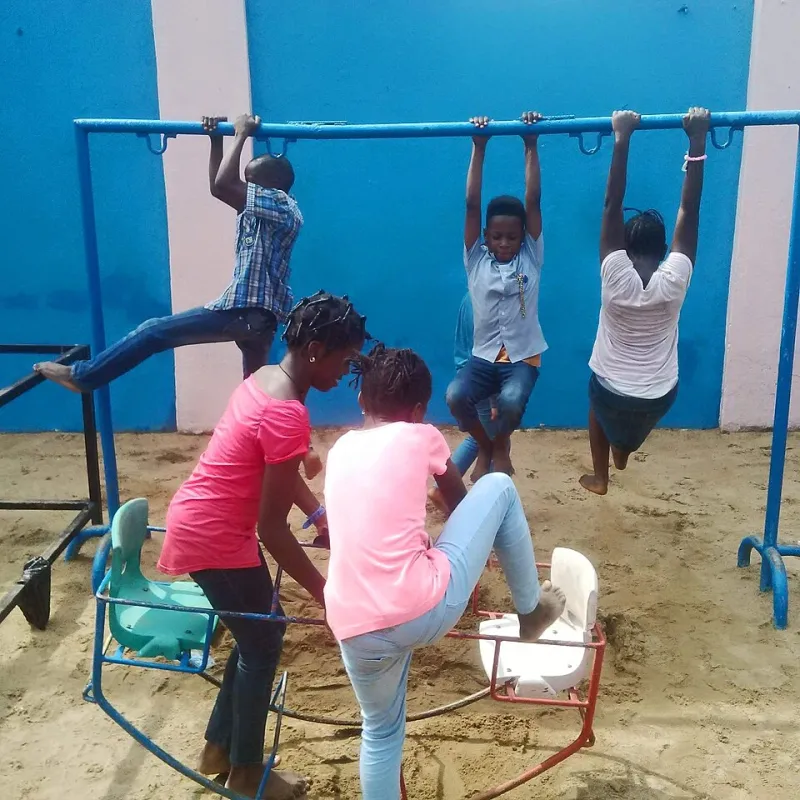
Photo: Ibukshizzy, CC BY-SA 4.0, via Wikimedia Commons
The Whistle Has Gone Quiet
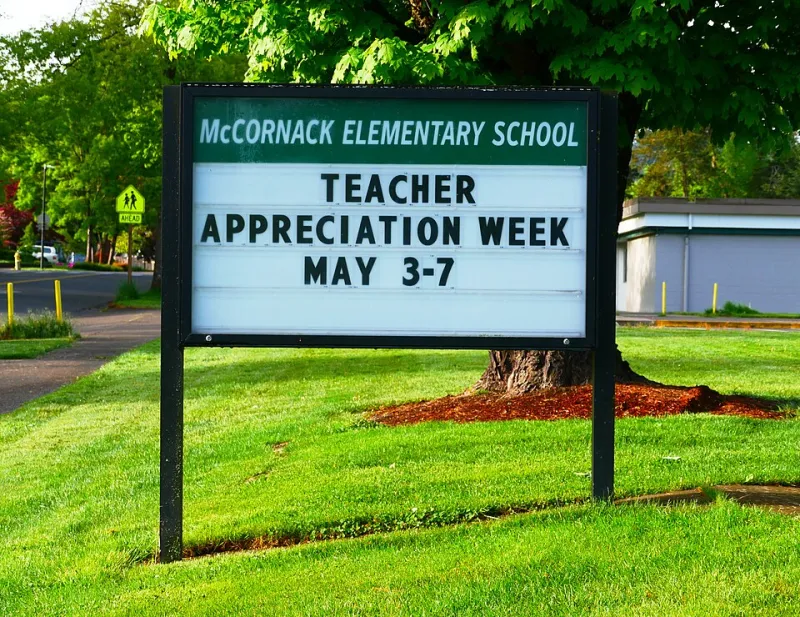
At a public elementary school outside Portland, Oregon, the lunch recess sounds different than it did a few years ago. There's still the squeak of sneakers and the thud of a kickball, but the soundtrack of adult intervention—the sharp whistle, the time-out lecture, the 'we don't grab, we ask'—has largely faded away.
That's not neglect. It's policy.
This school, like a small but growing number across the country, has adopted a 'kids try first' approach to playground conflict. When a dispute breaks out over a turn on the swings or a rule in a made-up game, staff hold back until the children involved have made a genuine attempt to resolve it themselves. Adults are present, watchful, and ready—but they're deliberately the second resort, not the first.
For parents raised on zero-tolerance playground supervision, it can look unnerving. Teachers describe it as the most important ten minutes of the school day.
Why Monitors Are Running on Empty
Talk to playground staff almost anywhere in America and you'll hear a version of the same story: recess has become the most stressful part of their job. One monitor in a suburban Ohio district described her role as 'full-time referee with no replay footage.' Every squabble gets escalated to her, every ruling spawns appeals, and the same disputes repeat day after day because the kids never get practice settling anything on their own.
Researchers who study recess call this the 'dependency loop.' When adults resolve every conflict instantly, children never build the skills to resolve conflicts themselves—so the conflicts keep coming, and adults keep adjudicating. The loop is exhausting for staff and stunting for kids.
The 'try first' model breaks that loop. Staff still step in immediately for anything involving safety, bullying dynamics, or a power imbalance. But for the ordinary friction of childhood—whose turn, what counts as fair, who was in the way—the default response becomes a question: 'What have you two tried so far?'
What the Research Says About Small Arguments
The developmental case for this approach is surprisingly robust. Studies on unstructured play consistently show that peer conflicts during play are where children rehearse negotiation, perspective-taking, and emotional regulation. A 2023 review in the journal Pediatrics noted that opportunities for child-directed play with minimal adult direction are associated with stronger executive function and better peer relationships.
In plain terms: kids learn to get along by practicing getting along, including the parts that involve disagreement.
There's a cultural thread here, too. Japanese schools—which Kodomo Project has explored before—build conflict resolution into daily life through student-led routines and group responsibility. American programs borrowing this spirit are finding that the same principle applies on the blacktop: competence grows from trust, not surveillance.
The Loose Parts Wildcard
Several of these schools have paired the conflict policy with a 'loose parts' recess—bins of crates, tires, planks, and pool noodles that kids build with freely. There are no fixed rules because there's no fixed game. Every structure, every team, every scoreboard exists only by agreement.
That makes negotiation unavoidable. A four-square court has rules someone else wrote; a crate fortress has rules the builders invent and revise in real time. Teachers report that disputes at loose-parts schools tend to be more creative and shorter-lived, because the kids have a stake in the game they invented.
What Parents Can Do When School Won't Budge
Not every district is ready to hand back the whistle. If your school's recess is still whistle-heavy, advocates suggest a few practical moves:
- Start the conversation with staff workload, not philosophy. 'Would this make your job easier?' lands better than 'children need autonomy.'
- Ask about a pilot. One graded playground, one semester, with a simple measure like office referrals from recess.
- Reinforce it at home. Sibling squabbles are the same skill set. Resist the urge to referee; ask 'What could you two try?' instead.
- Teach the script. Some kids genuinely lack the words. A simple 'I want a turn—can I have it after you?' goes a long way.
Trust Is the Curriculum
The Portland school's principal puts it plainly: 'We used to say we wanted kids who could solve problems. Then we solved every problem for them.' The whistle still exists. It just doesn't sing very often.
The deeper lesson might be the simplest one: children rise—or stumble—to the level of trust we extend. A playground where adults hover is a playground where adults are needed. A playground where kids get a chance to work it out is practice for every hallway, group project, and marriage they'll ever navigate.
That's a curriculum no worksheet can teach.