The Man Who Waits: How a Retired Mail Carrier Became the Most Reliable Part of One Block's School Mornings
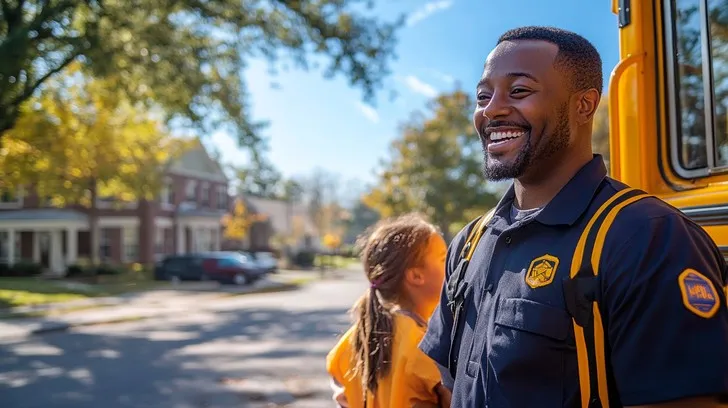
Photo: senior man waving to children at school bus stop suburban morning, via images.stockcake.com
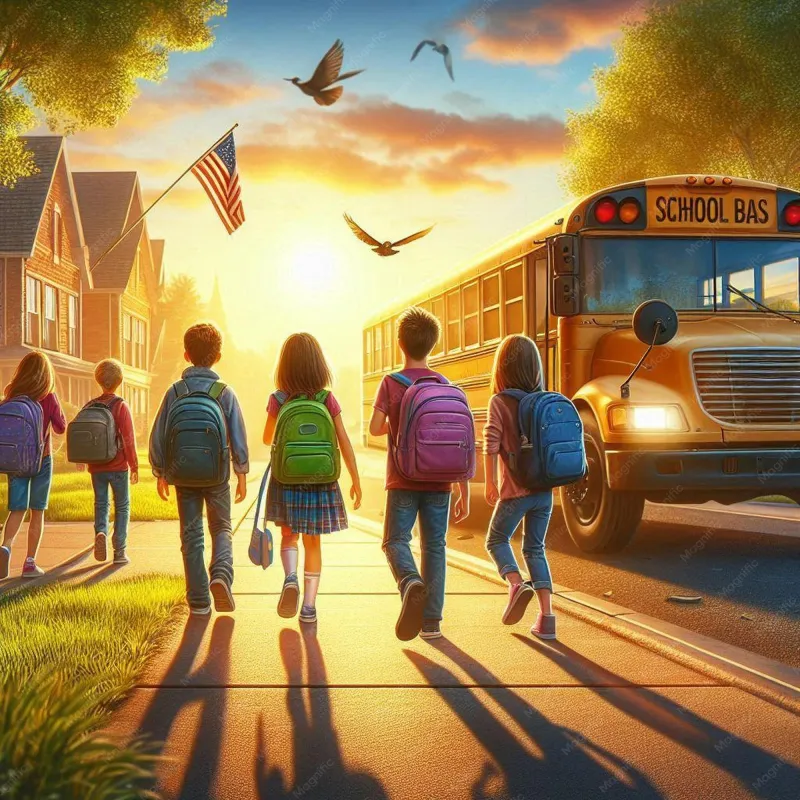
The kids on Delaney Street don't remember when it started. As far as most of them are concerned, Walter has always been there — standing at the corner by the fire hydrant, hands in the pockets of a jacket that has seen better decades, watching for the yellow bus like it's the most important appointment of his day.
Walter is seventy-one. He spent thirty-four years carrying mail through this same neighborhood, so he knows every porch, every loose sidewalk brick, every dog with opinions. When he retired in 2019, he says the quiet nearly did him in. Then one October morning, he noticed a kindergartner standing alone at the bus stop, wobbling on the curb while cars rolled past a little too fast for comfort.
He walked over. He said good morning. He's been back every school day since.
The Job Nobody Applied For
There's no title for what Walter does. He's not a crossing guard — the town handles that at the bigger intersections. He's not a paid supervisor, and the district didn't recruit him. He is, in the loosest and most wonderful sense, a fixture. A bus stop grandpa.
Ask around and you'll find versions of Walter in towns across the country. The retired teacher who stands at the apartment complex stop in Mesa. The grandmother with a folding chair in a Detroit cul-de-sac. The dad who works second shift and lingers over his coffee outside until the bus pulls away in a suburb outside Raleigh. None of them were asked. All of them noticed something — a gap, a wobble, a too-quiet kid — and decided to stand in it.
What they offer sounds small. A wave. A head count. A familiar face on a morning when a six-year-old's brand-new shoes hurt and Mom is already late for work. But developmental psychologists will tell you that predictability is a kind of safety net all its own. Kids don't need the adult at the corner to solve anything. They just need to know the adult will be there.
Why a Familiar Face Beats a Perfect Program
Here's the part that should make every school-district administrator a little uncomfortable: the most effective morning intervention on Delaney Street cost the town exactly nothing.
Researchers who study neighborhood cohesion have a term for people like Walter — "informal guardians." Their presence reduces the small risks that never make the news: the distracted driver, the moment a child darts after a dropped mitten, the loneliness that compounds quietly in kids who wait alone. But the deeper benefit is harder to measure. Kids who greet the same trusted adult every morning walk a little taller. They practice small talk. They learn that the neighborhood belongs to them, too.
One mother on the block put it plainly: "My son told Walter things he never told me. That the bus ride was scary. That another kid was picking on him. Walter passed it along to me that afternoon, gently, over the fence. That's a village. That's the whole thing."
How to Start a 'Stop Buddy' Tradition on Your Block
Nobody needs a permit to be kind, but a little structure helps the habit stick. If your corner could use a Walter, here's how neighbors in a handful of US towns have made it work:
- Start with a wave, not a commitment. Stand outside with your coffee for ten minutes. That's it. Consistency forms on its own once kids start expecting you.
- Pair up. Two or three neighbors rotating days keeps anyone from burning out — think of it as a carpool pool with zero driving.
- Set the one rule that matters: you're a friendly presence, not a disciplinarian or a mediator. Warmth, eyes on the kids, and a phone for emergencies. Everything else belongs to the parents.
- Loop in the school. A quick note to the front office that a trusted adult will be at the stop prevents confusion and, frankly, builds goodwill all around.
- Know your limits. Background-checked programs exist for a reason. If you want to go beyond your own block — mentoring, walking younger kids — plug into an established volunteer organization first.
The Retirement That Raised a Neighborhood
Walter doesn't think of himself as a volunteer. "I just didn't want to drink my coffee alone," he says, shrugging. But last June, when the fifth graders he'd watched for years moved up to middle school, three families showed up at his door with a card and a potted plant. One kid had written, in careful cursive: Thank you for waiting for us.
He keeps the card on his fridge.
There's a lesson in it for the rest of us, and it isn't complicated. We keep waiting for someone to fund the program, staff the position, fix the gap. Meanwhile, the fix is standing on the corner in a windbreaker, holding a thermos, counting backpacks. The bus always comes. But it's Walter who makes the morning feel safe — and every block in America has someone, or could.
The kids grow up and move on. New kindergartners wobble at the same hydrant every September. And Walter, seven decades deep into a life well lived, keeps showing up. Not because anyone asked. Because somebody should.