Adopted Grandparents and Preschools in Nursing Homes: How America Is Rebuilding the Village for Kids
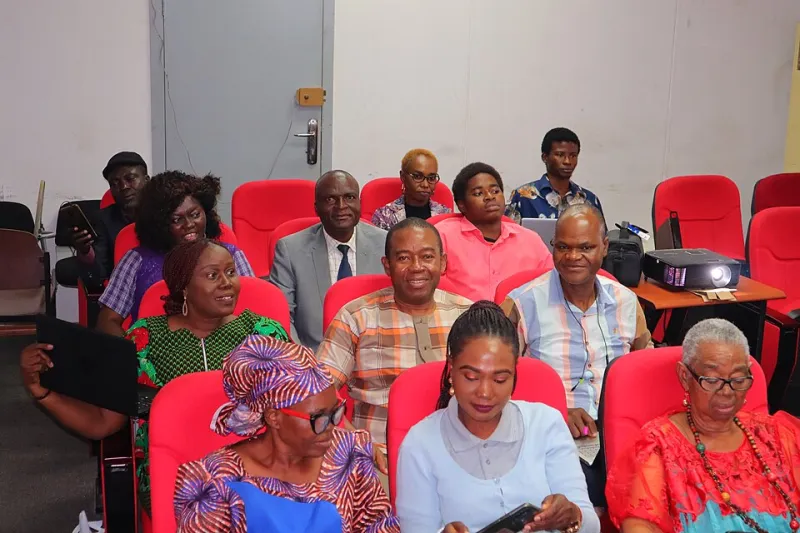
Photo: Wilson, CC BY-SA 4.0, via Wikimedia Commons
Ask your parents what childhood looked like for them, and there's a decent chance a grandmother or grandfather appears somewhere in the story. Sunday dinners. A grandma down the street who babysat on Fridays. An uncle who fixed bikes in the driveway.
Now look at your own kid's week. If your family is like most in the US, the nearest grandparent might be a three-hour flight away. Roughly one in four American families lives more than 500 miles from their closest elder relatives, and job mobility, housing costs, and divorce have only stretched those distances over the past few decades.
Sociologists have a name for what's been lost: the grandparent gap. And across the country, communities are quietly experimenting with ways to fill it.
What We Actually Lose When Elders Live Far Away
It's easy to frame distance from grandparents as a sentimental problem — kids missing out on extra cookies and holiday traditions. But researchers who study intergenerational relationships describe something more substantial.
Children with regular contact with older adults tend to show stronger empathy, better emotional regulation, and fewer ageist attitudes later in life. For elders, the benefits run both directions: seniors in regular intergenerational programs report lower rates of depression and, in some studies, slower cognitive decline.
Kids also get something they can't get from parents or peers — a third category of adult who loves them without being responsible for their daily discipline. Ask anyone who had a close grandparent: that relationship had its own weather system.
When that's missing, kids' mental model of aging gets shaped entirely by media and by the occasional awkward encounter at the grocery store. That's not great for them, and it's not great for how our society treats older people.
Preschools Inside Nursing Homes
The most celebrated model comes from Seattle, where the Intergenerational Learning Center places a preschool inside Providence Mount St. Vincent, a senior living facility. Five days a week, toddlers and octogenarians share music, art, and story time. The documentary Present Perfect captured the results: kids who initially saw residents as 'old people in wheelchairs' came to see them as friends with names, stories, and favorite songs.
The idea has spread. Similar programs now operate in Ohio, Oklahoma, Massachusetts, and elsewhere — some co-located in senior centers, others running regular visits to assisted living facilities. In one Ohio program, kindergartners pair with residents for 'reading buddies' every week, and teachers report the kids' reading stamina improves as much from the audience as from the practice.
For families without grandparents nearby, these programs offer something remarkable: a low-stakes way for children to build genuine bonds with elders chosen by proximity and shared curiosity rather than blood.
The 'Adopted Grandparent' Movement
Not every community can build a preschool inside a nursing home. A lighter-touch version is growing fast: volunteer networks that match local seniors with families who want elder relationships in their kids' lives.
Some churches and synagogues have long done this informally, pairing 'church grandmas' with young families. Now formalized programs — like the Grandparent Mentor Program in Ohio and various 'foster grandparent' initiatives funded through AmeriCorps Seniors — connect retired adults with children in schools, shelters, and Head Start classrooms.
The volunteers get purpose and regular contact with kids. The children get a consistent, patient adult who isn't checking a phone. One mother in a program outside Portland put it simply: 'My daughter's bonus grandma has known her since she was two. She's family now. We didn't ask permission from anybody.'
Practical Ways to Close the Distance
If you're a parent whose parents live out of state — or whose children have lost grandparents — there's more you can do than schedule the occasional video call. A few approaches that work:
- Upgrade the video call. Instead of freeform chat, have grandparents read the same book as your kid, teach a recipe over camera, or watch a show 'together.' Structured activities beat small talk for young children.
- Adopt an elder locally. Senior centers, community gardens, and religious congregations are full of older adults who'd welcome knowing a family. Start with a standing invitation — coffee once a month matters more than a big gesture once a year.
- Enroll in an intergenerational program. Search your state's Area Agency on Aging or AmeriCorps Seniors directory for foster grandparent and mentoring programs near you.
- Make visits about rituals, not sightseeing. Kids bond through repetition — the same pancake breakfast, the same puzzle, the same walk. Rituals travel better than itineraries.
- Talk about aging honestly. Kids take cues from us. If we speak warmly about the older adults in our lives, our children learn that growing old is something to be near, not something to avoid.
Raising Kids Who Know Their Elders
The grandparent gap won't close on its own — American families will keep moving for work, and housing economics won't suddenly put three generations on one street. But the programs sprouting from Seattle to Ohio suggest the gap isn't inevitable. It's a design problem, and communities are designing around it.
In Japan, where Kodomo Project draws much of its inspiration, multigenerational living and neighborhood elders have long been woven into daily life — the kodomo in our name belongs to a whole community, not just a household. American families may not replicate that structure, but we can rebuild its spirit, one adopted grandma, one reading buddy, one pancake breakfast at a time.
Our kids deserve to grow up knowing what old looks like — and knowing it's wonderful.